If you are drawn to Saratoga for space, privacy, and a sense of place, you are not alone. This is a city where estate living often feels tied to the land itself, with wooded hillsides, legacy parcels, and a historic village core that still shapes daily life. Understanding how Saratoga’s neighborhoods and home styles fit together can help you focus your search and make more confident decisions. Let’s dive in.
Why Saratoga Feels Different
Saratoga is a small residential city of about 31,000 people, and its identity is deeply connected to preservation, open space, and a semi-rural atmosphere. The city describes itself through prestigious neighborhoods, a historic Village, 14 parks, and extensive trails, all within a setting tucked into the trees of the Santa Cruz Mountains.
That backdrop matters when you are evaluating homes here. Saratoga did not grow as a uniform subdivision market. Its history moved from orchards and vineyards to a residential community with custom homes, estate properties, and distinct neighborhood patterns.
The Heritage Orchard helps tell that story. It reflects Saratoga’s roots as an agricultural hub and explains why many buyers still associate the city with gardens, mature grounds, and a quieter wine-country feel.
Estate Areas to Know
Parker Ranch and Open-Space Adjacency
If you are looking for one of Saratoga’s clearest estate-style settings, Parker Ranch is an important area to understand. The city’s trail and open-space maps show this area connecting with Fremont Older Open Space, which helps reinforce its low-density and more private character.
That connection to open space shapes the feel of the neighborhood. Homes in this part of Saratoga often appeal to buyers who value separation between properties, a more natural setting, and a sense of retreat without leaving the city.
Mount Eden, Villa Oaks, and Via Regina
For an even stronger foothill-estate setting, Mount Eden and Villa Oaks stand out. City trail maps place this area near Mountain Winery, Garrod Farm, and routes toward Stevens Creek County Park and Fremont Older Open Space.
The city also notes trail connections along the northern edge of Mount Eden Estates and toward Via Regina. In practical terms, that supports what many buyers notice right away: these areas often feel more tucked away, more topographically varied, and more closely tied to the foothills.
Village-Adjacent Saratoga
Not every buyer wants the hills first. If daily convenience is higher on your list, the areas near Saratoga Village offer a different kind of appeal.
The city describes the Village as its historic downtown heart along Big Basin Way, with dining, shops, galleries, coffee houses, parks, and trails. Civic anchors like the library, community center, and Prospect Center also help make this part of Saratoga the city’s convenience core.
For you, that can mean a lifestyle with easier access to everyday amenities while still enjoying Saratoga’s residential character. It is a different experience from the foothill neighborhoods, but one that many buyers prefer.
How Lot Size Shapes the Market
A big part of Saratoga’s estate identity comes from land. The city’s larger-lot residential districts, including R-1-20,000 and R-1-40,000, require standard lot sizes of 20,000 and 40,000 square feet respectively.
Those standards help explain why some parts of Saratoga feel more expansive than others. In hillside areas, the Hillside Residential district adds lower lot coverage and slope or ridge constraints, which can preserve a more open, less built-up character.
For buyers, this means that neighborhood feel is often tied as much to zoning and topography as to architecture. Two homes at a similar price point can offer very different experiences depending on parcel size, grading, and surrounding open space.
Home Styles You Will See in Saratoga
Classic and Traditional Styles
Saratoga’s heritage inventory shows a wide range of architectural types. You may come across early-American farmhouses, Victorian-era residences, Craftsman bungalows and cottages, and Eclectic Revival homes.
These styles reflect the city’s longer history and can add texture to the housing stock. In some cases, they appear as preserved older homes, and in others, they influence later renovations or estate properties with more traditional design cues.
Ranch Homes and Everyday Livability
Ranch-style homes are also an important part of Saratoga’s residential mix. For many buyers, they offer a practical layout, a strong indoor-outdoor connection, and a design language that fits well on larger lots.
In Saratoga, ranch homes can range from simpler single-level residences to expanded custom properties. That flexibility is part of why the style remains relevant in both established neighborhoods and estate-oriented settings.
Custom and Architect-Designed Homes
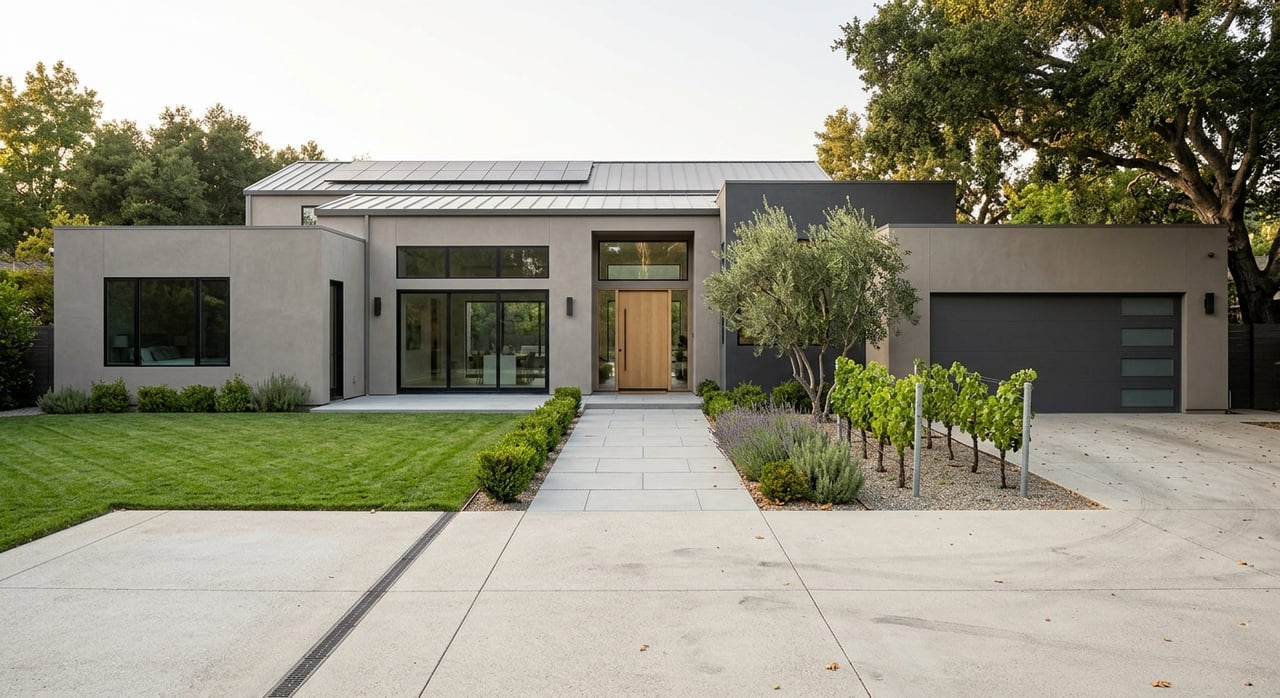
One of Saratoga’s defining features is the presence of custom homes, especially in the foothills. The city’s heritage documentation notes that many foothill homes were architect-designed, which is useful context when you are comparing Saratoga with more uniform luxury markets.
Instead of repeated tract patterns, you are more likely to see homes shaped by lot conditions, views, tree cover, and hillside form. That often creates a market where architecture feels more individual and where no two properties live exactly the same way.
Saratoga’s Mid-Century Modern Note
Saratoga also has a distinctive Mid-Century Modern pocket. The city identifies an Eichler tract on DeHavilland Drive and Shubert Drive as the only tract of its kind in Saratoga.
This area is known for California Modern design, including low-pitched rooflines, large glass areas, privacy-oriented planning, and a horseshoe street and cul-de-sac layout. If you appreciate Mid-Century design, this is one of Saratoga’s most recognizable architectural niches.
Choosing Between Hills and Village Access
One of the biggest decisions in Saratoga is not just what house you want, but what kind of daily rhythm fits you best. In broad terms, the foothills tend to offer a more secluded estate feel, while Village-adjacent areas offer easier access to dining, small retail, and community facilities.
Neither is better across the board. The right fit depends on whether you prioritize privacy, larger-lot character, and open-space adjacency, or prefer to stay closer to Saratoga’s compact convenience core.
When you tour homes, pay attention to more than finishes and square footage. Drive times within town, road patterns, topography, and trail access can all shape how a property feels once you actually live there.
Practical Ownership Considerations
Fire and Vegetation Planning
If you are considering Saratoga’s western hillsides, wildfire planning should be part of your evaluation. The city says the Wildland Urban Interface predominantly covers Saratoga’s western hillsides, and Saratoga is one of six Santa Clara County communities with areas designated by CAL FIRE as Very High Fire Hazard Severity zones.
For estate buyers, that can mean defensible-space requirements, vegetation management, and tree-regulation issues are part of ownership. These are important items to review early, especially if a property includes extensive landscaping or hillside terrain.
Slope, Ridge, and Site Constraints
In hillside locations, topography can shape what is possible on a property. The city’s Hillside Residential framework includes lower lot coverage and slope or ridge-related constraints that help preserve the open character of these areas.
That does not make hillside properties less desirable. It simply means that land value, usable outdoor area, and future changes to the home may need a more careful review than on flatter sites.
Trails and Daily Lifestyle
Saratoga’s trail system is a meaningful part of local life. The city highlights pedestrian and equestrian routes throughout Saratoga, and trail planning is a visible part of the community’s open-space structure.
For you, this can be more than a recreational detail. Proximity to trails, parks, and open-space connections may become one of the features that most strongly shapes your experience of a neighborhood.
What Buyers Often Find Most Appealing
Saratoga’s appeal is not just about luxury pricing or large homes. It is about the mix of estate scale, landscape, architectural variety, and a small-city identity that still feels grounded in history.
Some buyers are drawn to the privacy of Parker Ranch or the foothill character of Mount Eden and Villa Oaks. Others prefer the balance of residential calm and everyday convenience near Saratoga Village. In either case, the best outcomes usually come from understanding how the neighborhood, lot, and home style work together.
If you are exploring Saratoga at the estate level, a thoughtful, design-aware approach matters. The right home is rarely just about size. It is about setting, character, and how the property supports the way you want to live.
When you are ready for tailored guidance on Saratoga and other premier Peninsula markets, the Campi Group offers a refined, relationship-first approach grounded in local expertise and thoughtful presentation.
FAQs
What part of Saratoga feels most estate-like?
- The foothill and larger-lot areas, especially Parker Ranch and Mount Eden or Villa Oaks, are often the strongest estate-style settings because they combine larger parcels, open-space adjacency, and custom-home character.
What home styles are common in Saratoga?
- Saratoga includes Ranch, Craftsman, Victorian-era, Eclectic Revival, farmhouse, Modern, and custom architect-designed homes, with a notable Eichler Mid-Century Modern tract on DeHavilland Drive and Shubert Drive.
What should buyers know about Saratoga hillside homes?
- Buyers should pay close attention to wildfire considerations, vegetation management, tree regulations, and slope or ridgeline constraints, especially in the western hillsides and Wildland Urban Interface areas.
What is the appeal of living near Saratoga Village?
- Village-adjacent areas offer closer access to dining, shops, galleries, coffee houses, parks, trails, and civic destinations like the library, community center, and Prospect Center.
Why do Saratoga homes feel less uniform than other luxury markets?
- Saratoga’s history, larger-lot zoning, foothill topography, and architect-designed housing stock create more variation in home style, lot feel, and neighborhood character than in more tract-oriented markets.